Last year the TRF asked a selection of our members for their thoughts about horses being ridden on public roads. As you might expect, this prompted a lively debate. Of the 137 people who responded:
9.5% (13) thought horse riding should be banned from public roads.
5.1% (7) thought horse riding ought to be restricted to minor roads.
85.4% (117) thought that there should be no change to the status quo.
The TRF see this as a clear affirmation of equine entitlement and a fair representation of the empathy motorcyclists have with other vulnerable road users. Many of the people who wished to curtail equine use sought to justify their opinion using similar misconceptions to those which are often levelled at motorcyclists and motorcycling.
To help trail riders better understand horse riding and the needs of horse riders we invited Alan Hiscox – Director of Safety at the British Horse Society – to comment on some of the beliefs aired during the discussion.
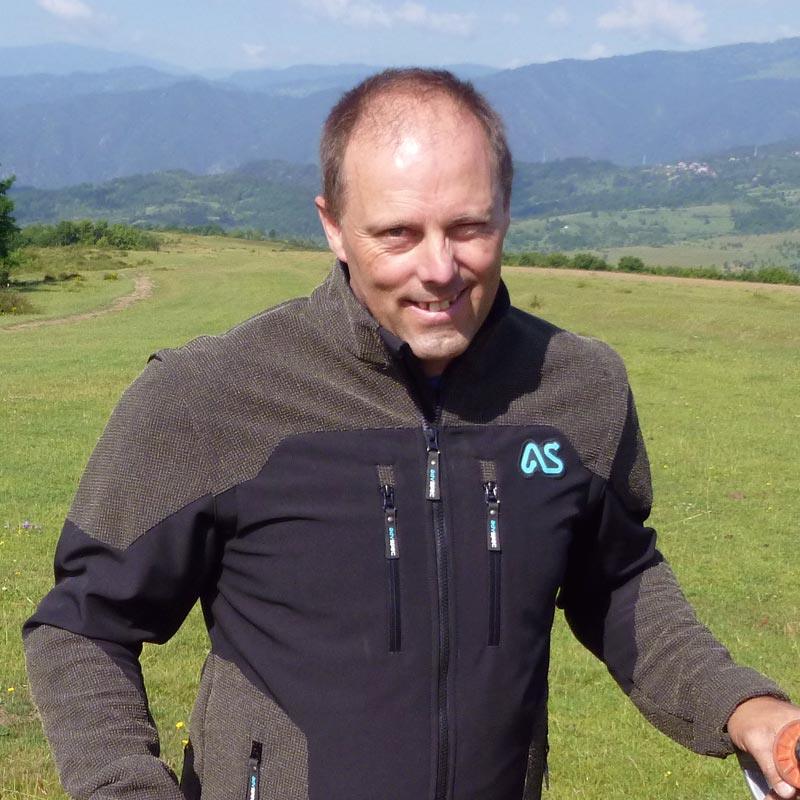
Alan with an equine friend.
Alan…
TRF:
Alan, thank you for finding the time to answer questions for Trail. Please tell us more about yourself and the work you do.
no-repeat;center top;;
Firstly…
Alan:
Firstly, can I thank TRF for this opportunity to tell your members more about the British Horse Society’s Dead Slow campaign and the work we are doing to increase the education of drivers on how to treat all vulnerable road users, but especially horses.
I spent 32 years in the Mounted Police in London, so I know a bit about riding horses on some of the busiest roads in the UK.
My horse has been hit by vehicles passing too close and if I had a pound for every near miss, I would be very rich!!
I am now responsible for the Dead Slow campaign which is looking reduce the number of horse and riders injured on our roads by not only changing the behaviour of drivers but also to let horse riders know how they can increase their safety by taking their responsibilities seriously when riding on the roads.
The BHS has had significant success with partnerships with the DfT, the Police and road safety organistions. Last year saw a 38% reduction in horses killed on the roads so we hope the Dead Slow campaign is making a difference. We make presentations to riders, drivers and communities to try to influence drivers skills when passing horses.
no-repeat;center top;;
TRF: It’s helpful to
TRF:
It’s helpful to have the opportunity to get input from an equine authority authority such as yourself on some common misconceptions. Lets start with this one: ‘Horses and horse riders ought to have some sort of training before they ride on the road’.
no-repeat;center top;;
This is a statement
Alan:
This is a statement I hear a lot, and in a perfect world I would agree.
The BHS run a training programme for all riders called the Ride Safe Award, and I would encourage all riders to take this. Even Mounted Police Units have and are taking this award. Riders can do a lot at home to get their horses prepared for riding on the road. They can desensitise their horses to the sights and sound of a road, by having friends slowly introduce them to bicycles, motorbikes and cars.
Horse riders share a great deal with motorcyclists and that is that we are perhaps the most vulnerable road users.
If we can raise our own awareness of all the challenges and make other drivers aware of these challenges, surely mutual respect and safer driving and riding will result.
Of course we will never totally eradicate careless and thoughtless driving but I am very passionate about each one of us reducing the risk as much as possible and that means taking some training.
TRF:
I think the regularity with which some motorists disregard our safety means we often take initiatives such as post-test training, peer assessment/critique and defensive riding for granted.
We learn how to compensate for the ignorance and carelessness of others.
no-repeat;center top;;
https://trail.trf.org.uk/wp-content/uploads/2018/06/Jan-1.jpg
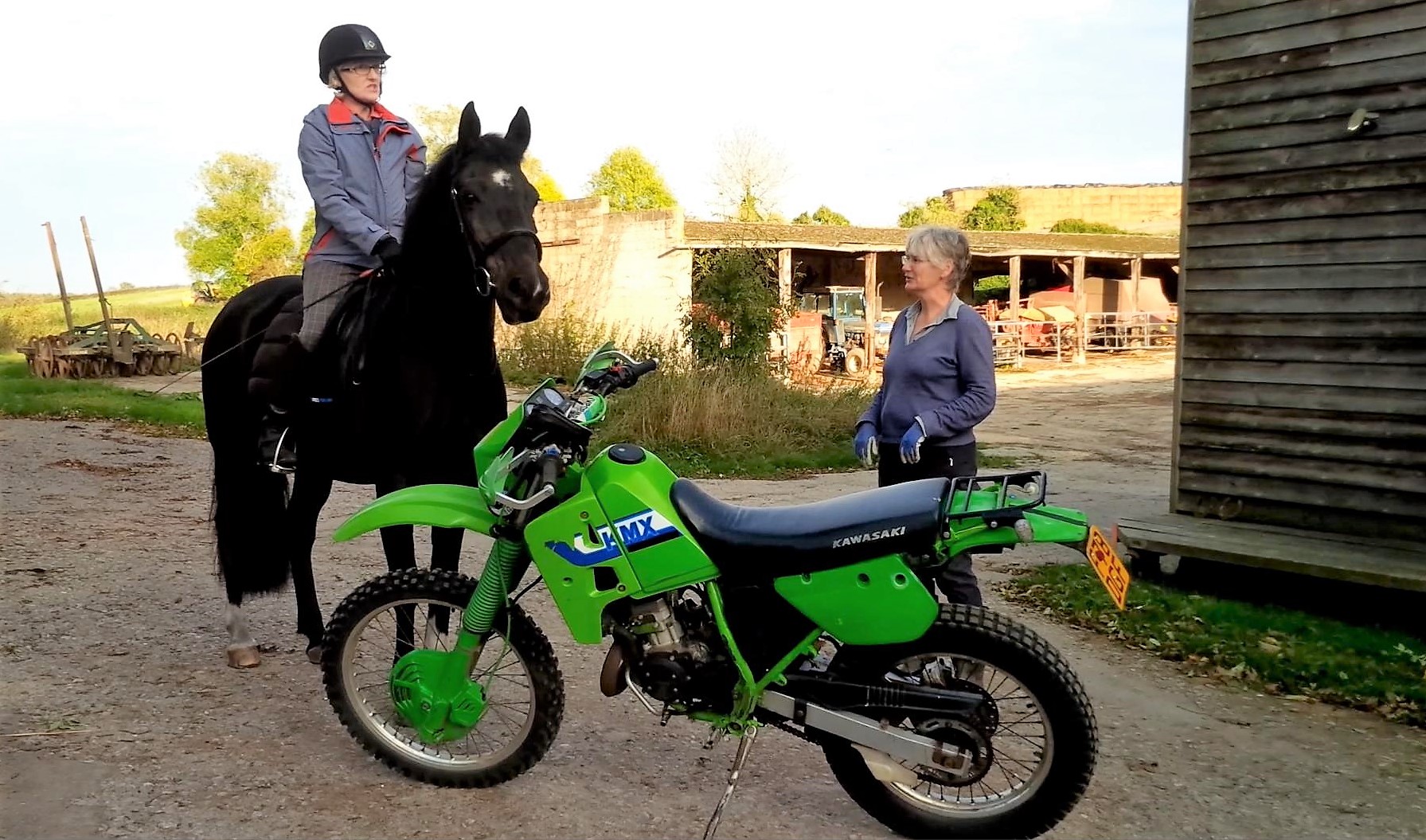
TRF can provide motorcycles for safe equine acclimatisation.
TRF: Ok next statement
TRF:
OK, next statement: ‘Horses and their riders ought to be insured’.
no-repeat;center top;;
Alan: I cannot emphasise
Alan:
I cannot emphasise enough the need for all riders to insure themselves when out riding.
The BHS Gold Membership offers one of the best third party injury or property damage public liability cover, up to £30 million. This means that you are covered for any recreational eventuality that may occur both on and off the road. Riders should also cover themselves for veterinary costs that can be substantial if you were to be involved in an accident on the roads. BHS Gold membership covers you for any horse you own or have permission to ride for recreational purposes.
The golden rule is to ensure you are fully insured.
no-repeat;center top;;
ANdrew dalton
TRF member, solicitor (and multiple horse & motorcycle owner) Andrew Dalton adds:
The Animals Act is possibly the worst drafted Act ever to leave Parliament. A horse, acting as a horse, with no history of say biting or kicking would be difficult to establish liability against the equestrian but a horse rider can be sued, though it is far from easy.
Historically, horses use roads and bridleways by right and motorists by license. A trail rider who adopts the TRF best practice around horses shouldn’t ever be in difficulty around just about any horse. An equestrian would be liable for furious or negligent horse riding and could – in limited circumstances – be vulnerable in criminal law.
But on the lanes the law expects us all to rub along with consideration for each other – If we’re all kind to each other, the law does not need to intervene.
gray
no-repeat;center top;;
10px
TRF: Next statement, Horse Riders
TRF:
Next statement: ‘Horse riders ought to stick to their 20,000 miles of bridleways and leave our 3,000 miles of byways to us’.
no-repeat;center top;;
Alan: Horse riders…
Alan:
Horse riders are only using roads and byways to access bridleways. Believe me, given the choice, riders and horses would not want to use roads and come into contact with other motorised vehicles.
The fact is we have to use them because of the fragmented network, although the BHS are working with other stakeholders to increase the number of multi user routes and keep the existing ones. A sympathetic sharing of space by all vulnerable road users is critical for all our safety and enjoyment.
A lot of horse riders are motorcyclists and drivers as well, and I am sure the reverse is true so we should all respect each other’s requirements. If there is careless driving or riding for that matter (horses and motorbikes) there are avenues available for the police and individuals to take action, especially with the helmet cameras.
Surely impatience and lack of respect by either party could cause injury and loss for both?
We are all vulnerable, let’s work together, not against each other.
no-repeat;center top;;
We are all
TRF:
A fragmented network is something that affects motorcyclists too, with complaints about the amount of ‘road work’ in between green roads being a regular complaint amongst trail riders.
We recognise that our entitlement to use public roads and byways is subject to responsibilities and obligations. Our experience is that a majority of equestrians are happy to share these spaces with responsible motorcyclists.
no-repeat;center top;;
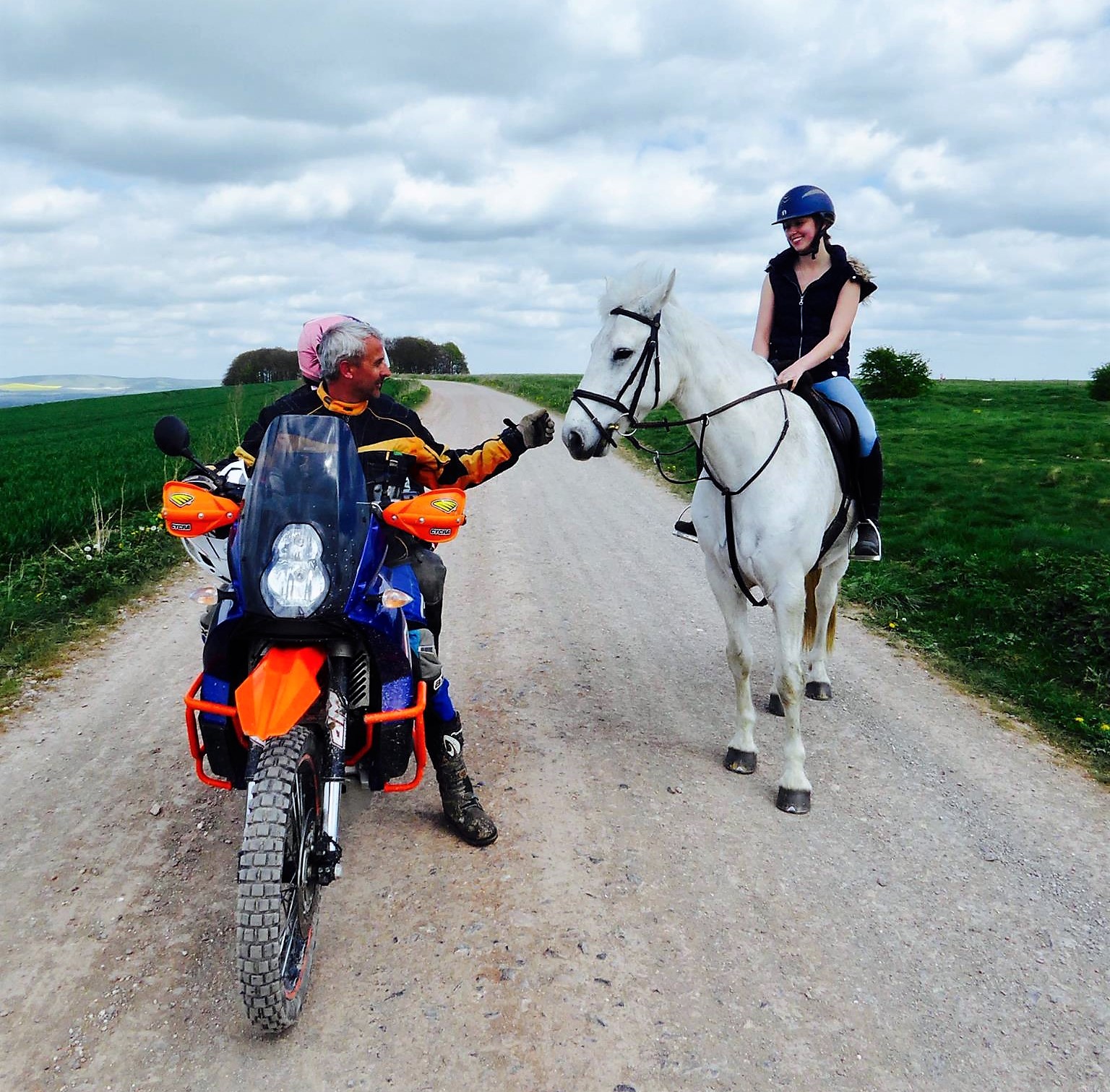
https://trail.trf.org.uk/wp-content/uploads/2018/06/Nick-Robinson-Horse-Crop.jpg
Safe public spaces are as important to motorcyclists as they are to equestrians.
TRF: Horses and their…
TRF:
Next statement: ‘Horses and their riders ought to be made to wear hi-vis in public places’.
no-repeat;center top;;
Alan: It is paramount
Alan:
It is paramount to safety that horse riders wear conspicuous clothing for themselves and their horses at all times.
The BHS commissioned a report from the Transport Research Laboratory in 2017 on the ‘Conspicuity of horses and riders on the roads’.
There have been many urban myths about Hi viz, but now we have scientific evidence about how it will keep riders safer. It came up with 3 recommendations; speed limits where there are significant horse and rider activity should be reduced and enforced, riders should utilise clothing that contains LED lights and riders should use bright and reflective clothing wherever feasible. This last one talks about prioritising width over height and using biological motion cues on horse’s legs.
I know that motorcycles are using twin or even three lights to help their conspicuity, so there is some common ground here. The full report can be found on the BHS website and is an interesting read.
In short if riders go out without any conspicuous clothing they may well be impacting their safety, and the welfare of their horse.
TRF:
Particularly as evolution has bestowed horses a suite of inconspicuous colours, what with being prey animals. Hi-vis really is a welfare issue.
no-repeat;center top;;
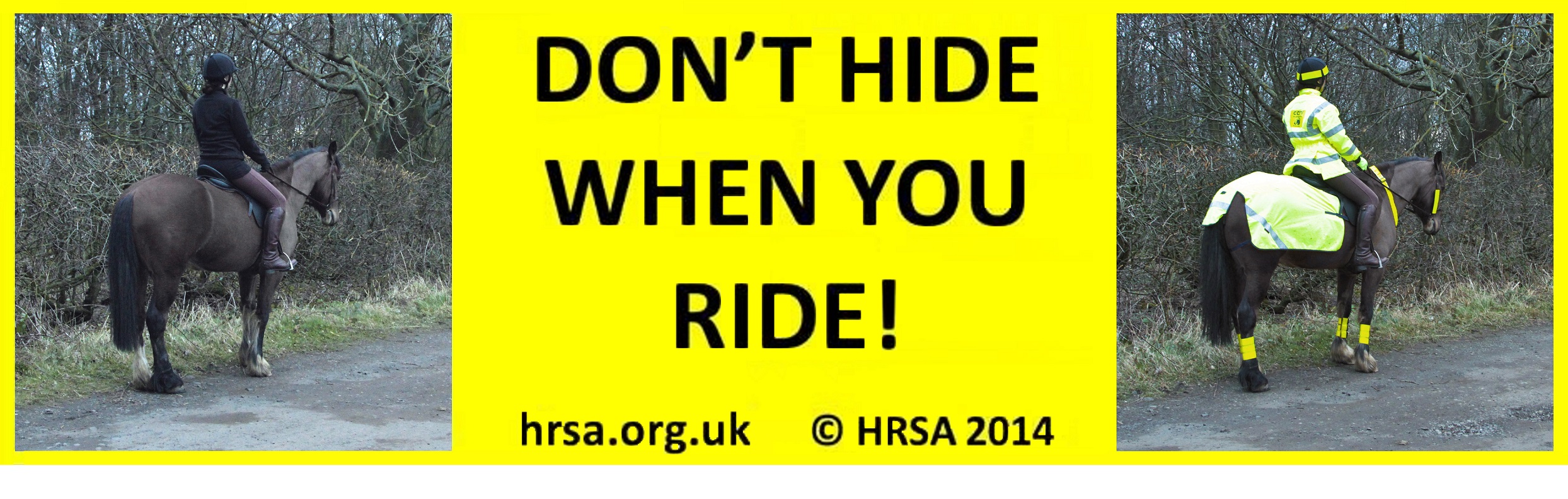
https://trail.trf.org.uk/wp-content/uploads/2018/06/Dont-Hide-When-You-Ride-2.jpg
HRSA are also keen proponents of hi-vis (image used with permission).
TRF: Horse riders should be made
TRF:
OK, next statement: ‘Horse riders ought to be made to pick up their horses’ poo’.
no-repeat;center top;;
A difficult
Alan:
A difficult task to do at the time, but where specific complaints have been received I know stables go and pick up. Horse manure is bio-degradable and is different to dog poo, so that’s why it is good for compost!
Riders are encouraged to move to the edge of the route if they know their horse is likely to deposit, so out of the ride line of motorcycles, but of course this isn’t always possible.
I hope that horse dung is not much of a problem to trial bike riders, as they have to deal with more ‘interesting’ conditions to ride over, I’m sure!
There is also the consideration of being aware of the road ahead, and horse warning triangle signs should give an indication there may be manure on the road.
TRF:
I remember being instructed to look out for manure on the road when I undertook my compulsory basic training. Fresh deposits are a useful indicator of the presence of horses on any given road or byway.
no-repeat;center top;;
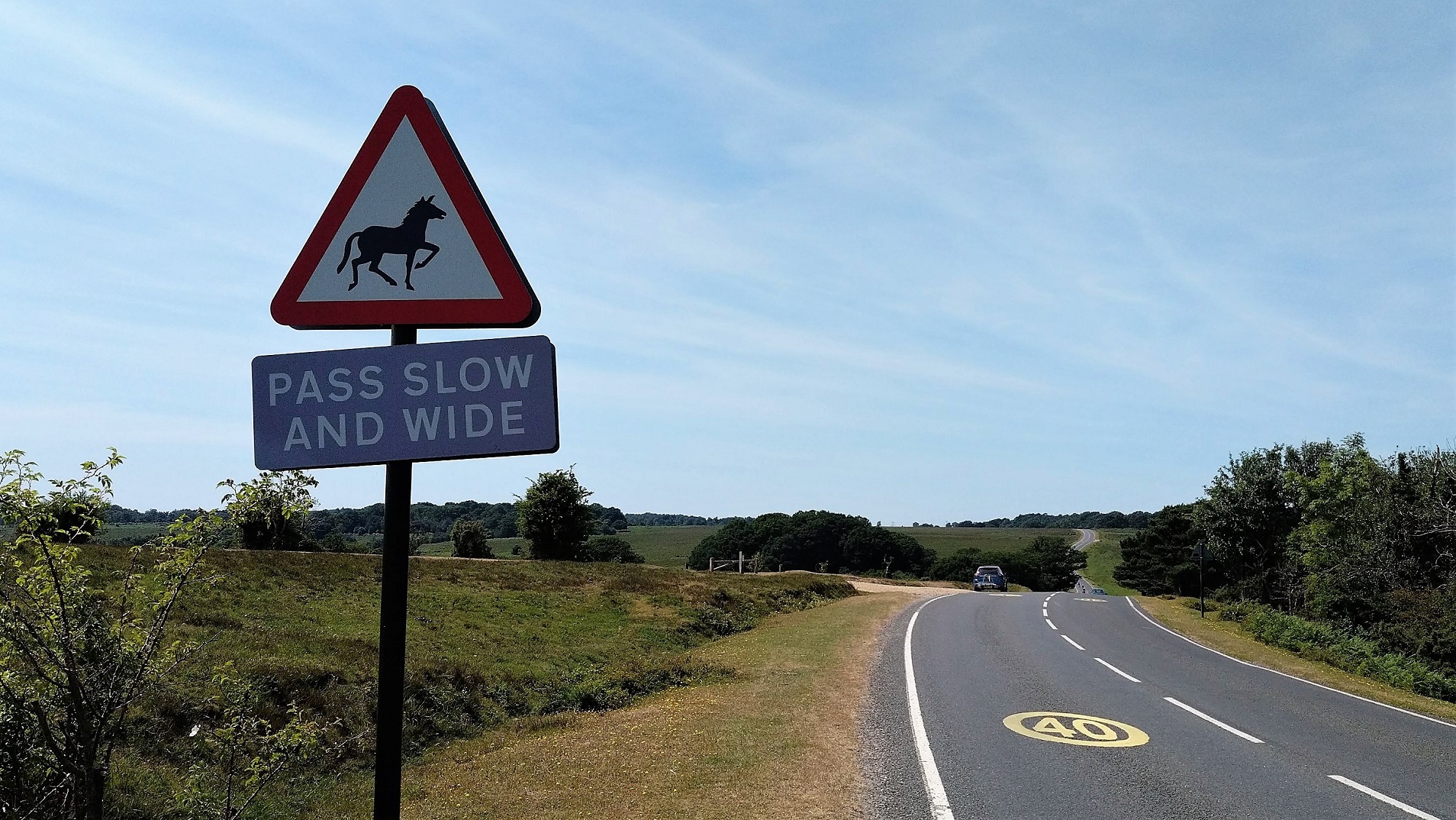
https://trail.trf.org.uk/wp-content/uploads/2018/06/Pass-wide-and-slow-feral-horse.jpg
Areas well-used by horse riders and feral horses are often signed.
TRF: Horse riders ought to pay road tax
TRF:
Next statement: ‘Horse riders ought to pay roa…’.
no-repeat;center top;;
Alan: There is no
Alan:
There is no such thing as ‘road tax’. – That stopped in 1937!
Vehicle Excise Duty that is paid by all of us if we own a car (not electric vehicles) goes to many things not just roads. It is calculated on emissions, so you could argue that horse riders would not need to pay anyway. See my previous answer!!
Also the vast majority of riders own cars, so we do pay VED.
TRF:
If even a small proportion of VED paid by trail riders was allocated to maintaining green roads or creating hardstanding for horse boxes then it would greatly benefit the wider public.
Learn more about electric motorcycles by clicking HERE.
no-repeat;center top;;
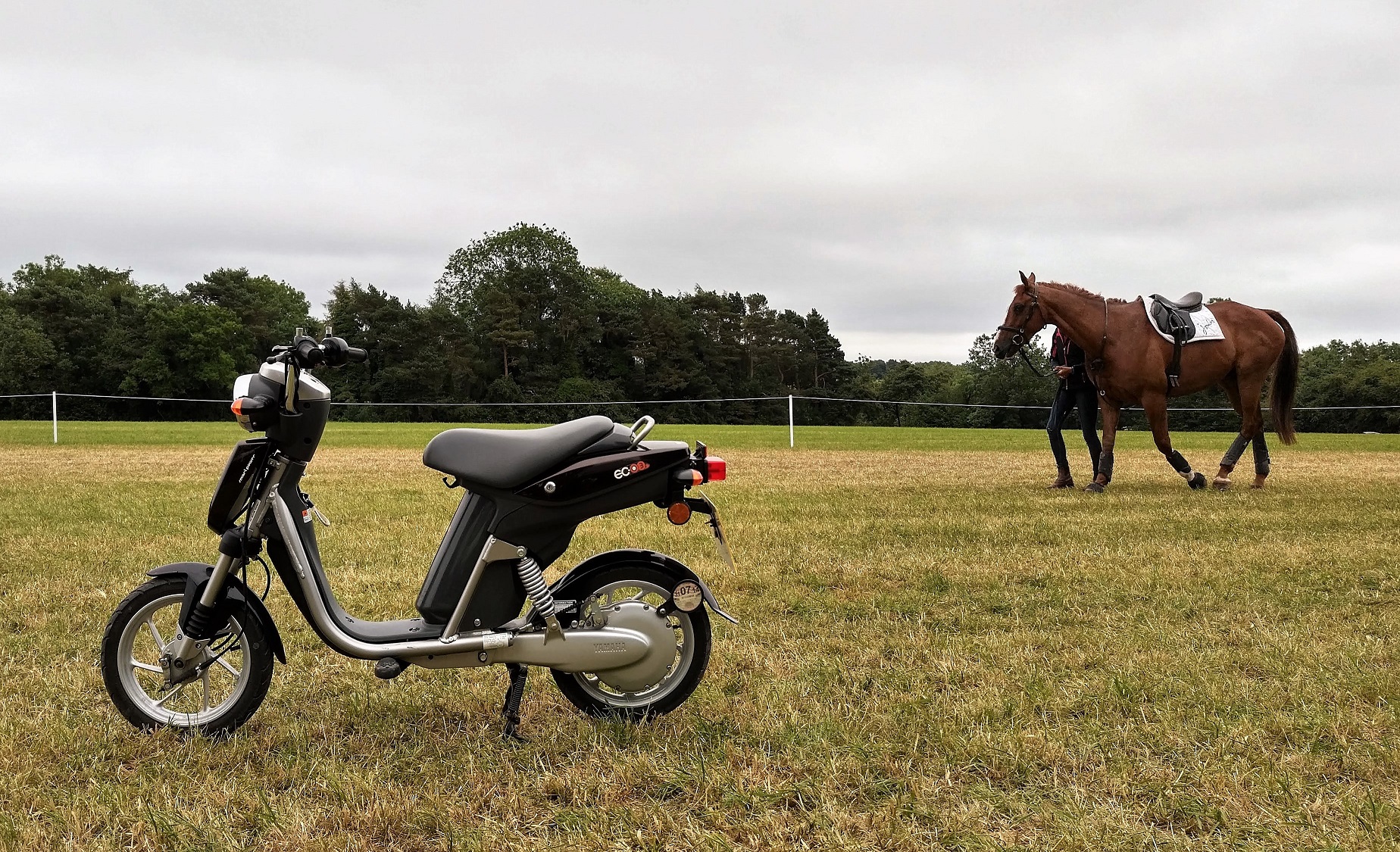
https://trail.trf.org.uk/wp-content/uploads/2018/06/EV-Nunney.jpg
1.9 and 1.0 horsepower – neither are liable for VED.
TRF: How do you think
TRF:
How do you think the results of our poll compare with the attitudes of other user groups?
no-repeat;center top;;
Alan: I was not surprised
Alan:
I was not surprised actually, in a recent RAC survey on inconsiderate driving, diving too close or too fast past horses was the 7th most inconsiderate behaviour. Driving too close past cyclists was 9th!
I believe that the vast majority of drivers drive considerately and carefully, it’s just that they are not sure how to pass horses safely and that’s where our Dead Slow messages come in.
If I see a horse on the road, then I will:
Slow down – to 15mph.
Be patient – I won’t sound my horn or rev my engine.
Pass wide and slow – at least a car’s width if possible.
Drive slowly away.
no-repeat;center top;;
https://trail.trf.org.uk/wp-content/uploads/2018/07/Horses-Hi-Viz.jpg
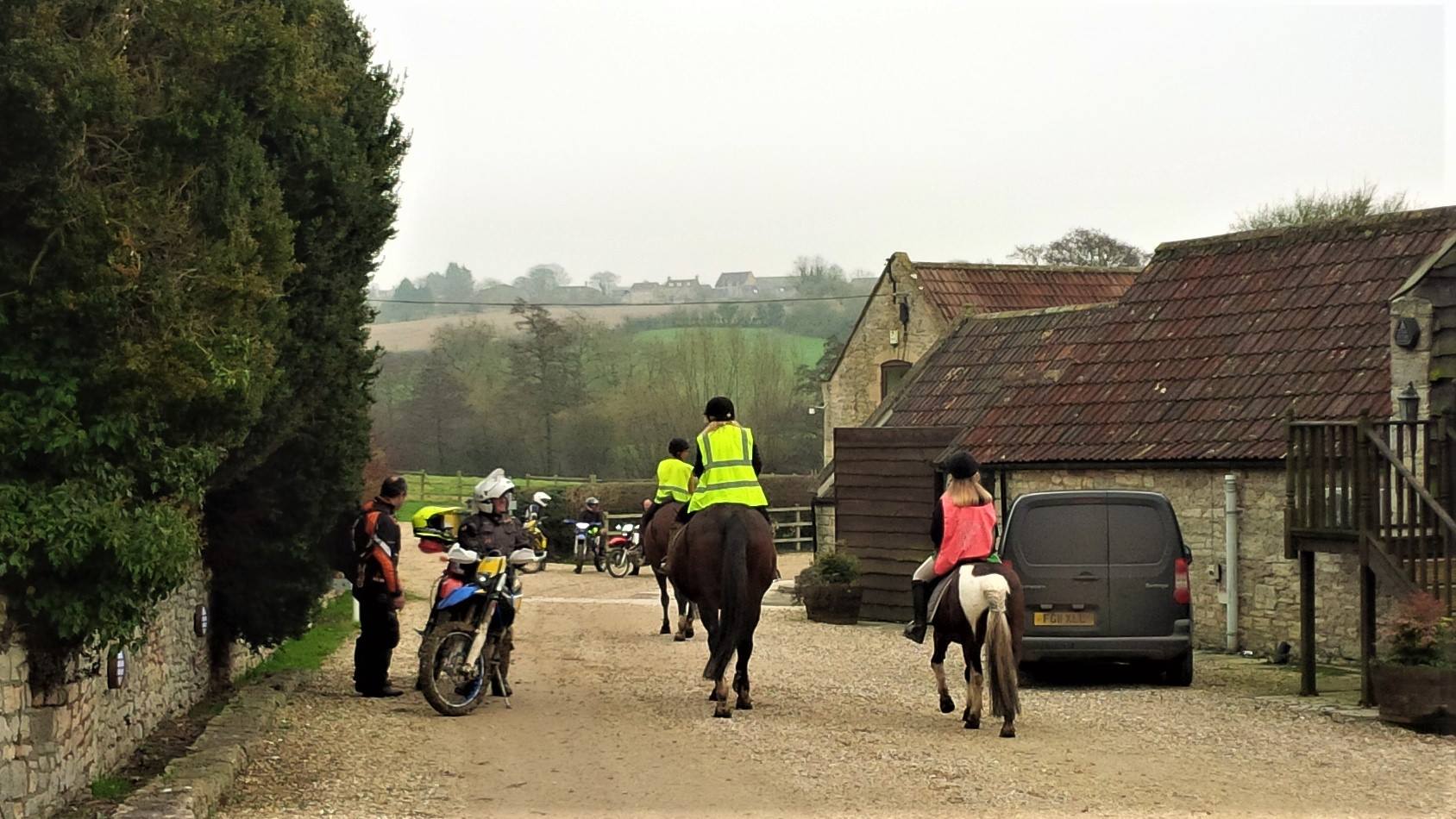
Rider education is an integral part of both motorcycling and horse riding.
Informal polling of two
Informal polling of two prominent equine safety groups on Facebook produced differing results, which are likely explained by each group’s respective culture and subject matter.
Horses & Road Safety Awareness:
68.2% (443) thought that drivers would keep the status quo.
27.7% (180) thought that drivers would ban horse riding from public roads.
4.1% (27) thought that drivers would restrict horse riding to minor roads.
68.0% (215) thought that drivers would ban horse riding from public roads.
26.3% (83) thought that drivers would keep the status quo.
5.7% (18) thought that drivers would restrict horse riding to minor roads.
We hope that horse riders will be encouraged by the attitude of TRF members and the measures we have taken to help make using public roads safer for everyone.
The revised TRF code of conduct introduced greater provision for protecting equestrians and was adopted by our members with a 96% approval.
The TRF member code now extends to sealed roads, which are statistically more dangerous than green roads due to the higher vehicle speeds that they are engineered to enable.
gray
no-repeat;center top;;
10px
TRF: Is there any specific
TRF:
Is there any specific advice about equine road safety that you think motorcyclists may have overlooked or ought to be more mindful of?
no-repeat;center top;;
Alan: Apart from the
Alan:
Apart from the Dead Slow advice, try and remember there are three brains working when you meet a horse: yours, the riders, and the horse.
They are prey animals so they may well want to reduce, remove or avoid a perceived risk at any time, BUT you can help train the horse to accept the risk by being considerate and careful. Remember that horses can weigh up to ¾ tonne, they can move very fast and will cause serious damage to you and your bike if they hit you, or you hit them.
I would also ask all TRF members to report any incident, or near miss with a horse to the BHS accident website horseaccidents.org.uk. This is the only way that we can improve our advice to riders and take action to avoid a similar incident.
I have always found that motorcyclists are amongst the most careful drivers around horses so thank you for that.
no-repeat;center top;;
https://trail.trf.org.uk/wp-content/uploads/2018/06/12068974_943810445655097_7892883750252579572_o.jpg
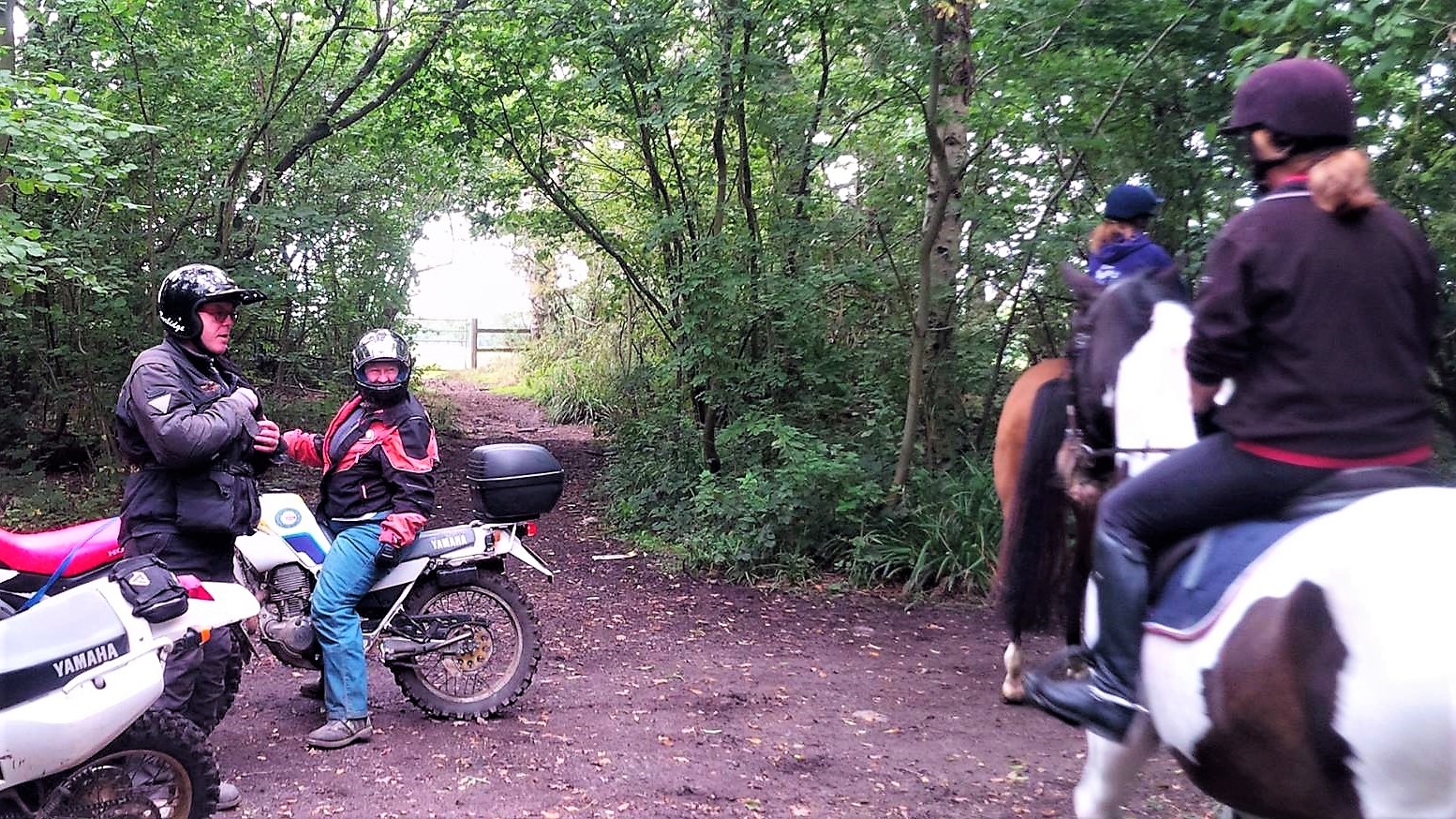
Horse riders and motorcyclists often say the nicest things about one another.
TRF: Thank you for your time
TRF:
Thank you for your time Alan, I hope this piece helps make riding in shared spaces safer for horse riders.
no-repeat;center top;;
Alan: Thank you for the opportunity
Alan:
Thank you for the opportunity to talk to another group of VRU, together we can work to educate other drivers and influence their behaviour when driving around and on the same roads as us.
Cyclists, motorcyclists and horse riders must work together to improve our safety.
no-repeat;center top;;
https://trail.trf.org.uk/wp-content/uploads/2018/06/13559210_1086791838023623_9022661802679508189_o.jpg
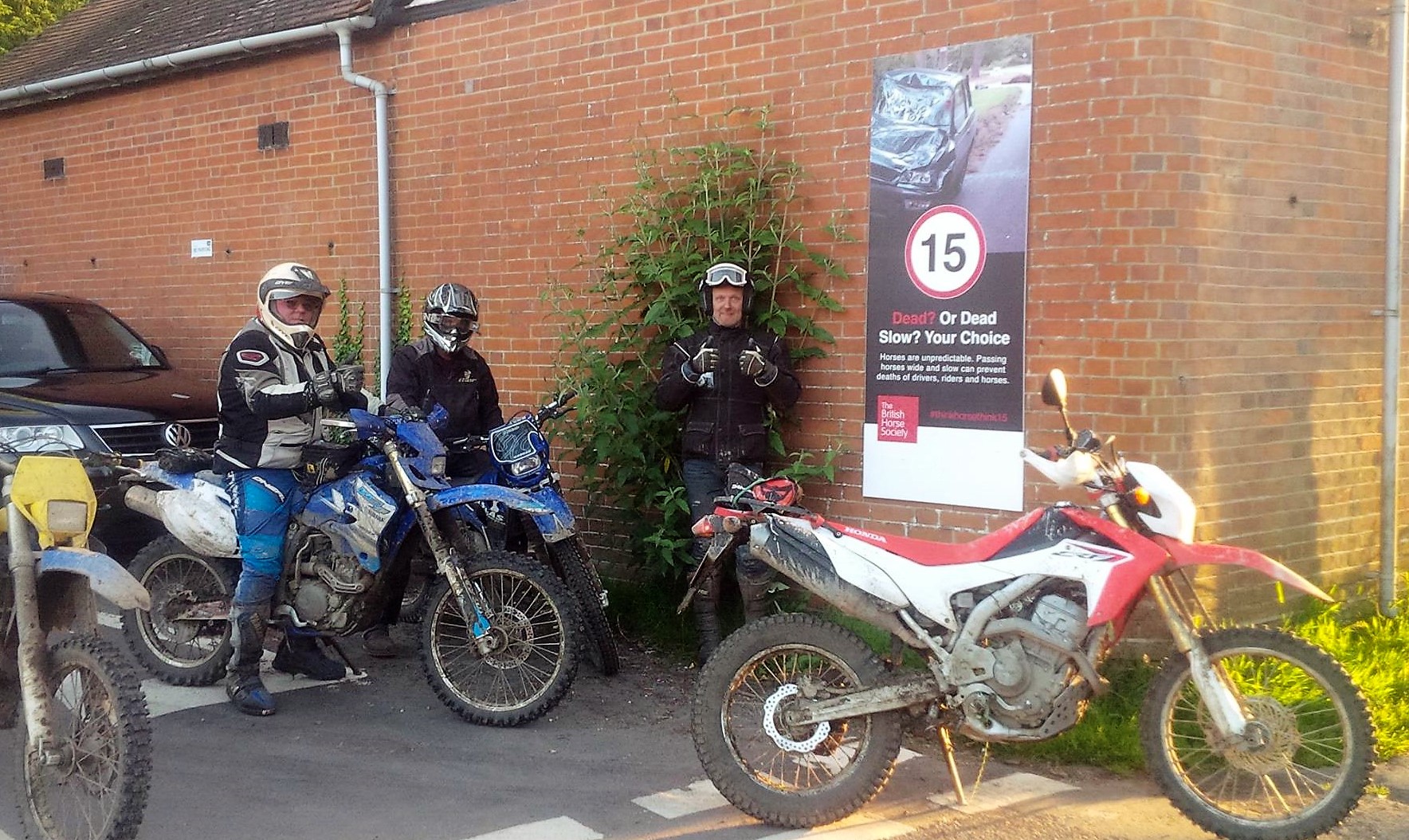
TRF support the BHS ‘Dead Slow’ campaign.
Like motorcyclists horse riders
Like motorcyclists, horse riders are particularly vulnerable on public roads so benefit from specific rules in the Highway Code and through the THINK! road safety campaign.
Thankfully there are several organisations that advise horse riders how to reduce road risk and what to do if they are the victims of negligent drivers, with wearable cameras being an invaluable tool in securing justice.
We support the establishment of a vulnerable road users’ forum in order that motorcyclists, cyclists, equestrians and others can work with one another to understand our respective needs and wishes, reduce road risk and advise how best to protect us.
gray
no-repeat;center top;;
10px
THINK!
THINK!:
left
no-repeat;center top;;
Website
center
icon-right-circled
left
green
3
https://www.facebook.com/THINKroadsafety/
center
icon-right-circled
left
green
3
default
BHS
The British Horse Society:
left
no-repeat;center top;;
Website
http://www.bhs.org.uk/safety-and-accidents
center
icon-right-circled
left
green
3
https://www.facebook.com/TheBritishHorseSociety/
center
icon-right-circled
left
green
3
default
HRSA:
Horses & Road Safety Awareness:
left
no-repeat;center top;;
Website
center
icon-right-circled
left
green
3
https://www.facebook.com/groups/horsesafetyawareness/
center
icon-right-circled
left
green
3
default
Pass Wide & Slow:
Pass Wide & Slow:
left
no-repeat;center top;;
https://www.facebook.com/groups/passwideandslow/
center
icon-right-circled
left
green
3